Timing is Everything
The Meeting That Matters Most: How To Get Invited and Make It Count
You did the research, and you uncovered meaningful insights. But when the company is in execution mode, your big findings might land with a thud—or worse, get lost completely.
So, how do you ensure that your work actually shapes strategy? It’s easy: get on the planning team’s agenda.
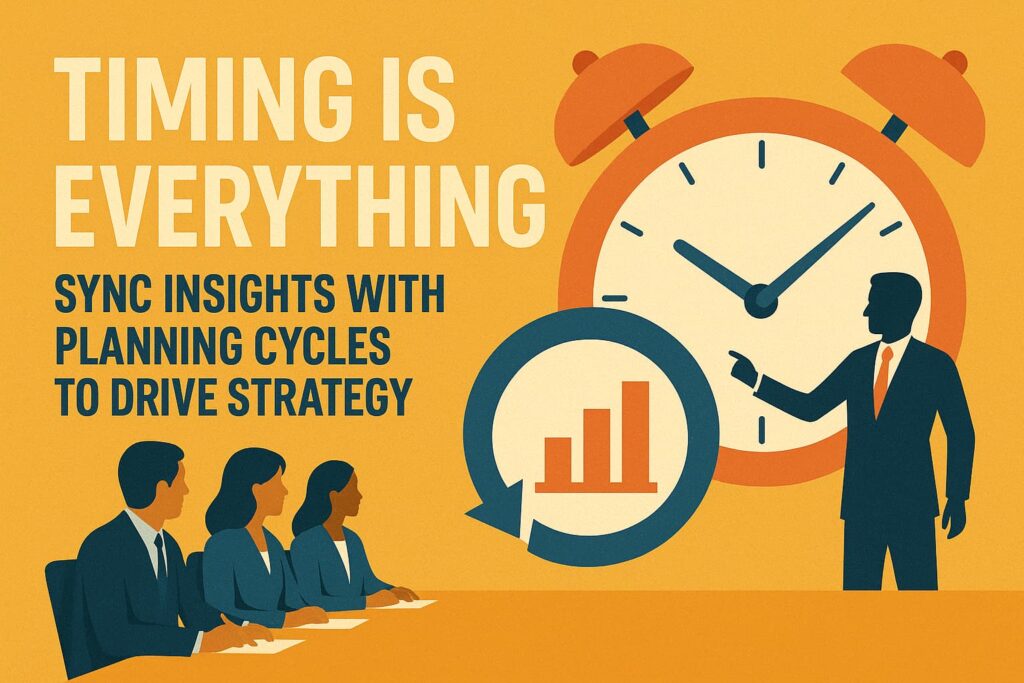
Timing Is Everything
Every company has a rhythm. There’s a time for planning, and there’s a time for executing. If you present your most strategic insights during execution mode, odds are they’ll be forgotten when real decisions are made.
But there’s a window—the annual strategic planning meeting—when leaders are hungry for direction. This is your shot. Don’t miss it.
Why the Planning Meeting Matters
Senior leaders gather once a year to make the big calls: budgets, priorities, bets for the next 12 months. That meeting sets the course. And guess what? They want to start those meetings with a smart, insightful overview of the year’s top findings. Who wouldn’t want to hear what customers are thinking before they place big strategic bets?
You have something they don’t: clear, data-backed insights from the front lines. That’s gold.
Getting on the Agenda: A Playbook
You don’t need politics or a C-suite sponsor. You need a plan. Here’s how to make it happen:
1. Have Something to Say
Don’t show up with a 70-slide deck. Cull your work to the top 4–6 customer insights of the year—the ones that matter most. Less is more. Relevance is king.
2. Know Your Moment
Find out who owns the planning process, and ask to be part of the agenda early. Don’t wait until invites go out—by then, it’s too late. Be proactive, and position your presentation as a strategic spark to kick off the meeting.
3. Sell the Value
Frame it as a high-impact, 15-minute session: “The Year’s Most Strategic Customer Insights.” You’re not asking for airtime—you’re offering clarity at a critical moment.
How to Present to Senior Leaders (and Not Get Crushed)
Presenting to the top dogs is different. They don’t want a research report—they want a point of view. Here’s how to deliver:
- Lead with your conclusions. Open with the key takeaway, then show just enough data to support it.
- Keep it punchy. No research jargon. No deep dives into methods. This is about decisions, not methodology.
- Integrate other proof points. Supporting evidence from other teams or market signals makes your case even stronger. Don’t make it just about you and your data.
- Anticipate objections. Think through who might push back, and defuse it upfront.
- Avoid the method trap. If leaders start asking how the study was done, they resist the insight. Stay focused on the why behind the data.
- Be ready to support your points. This group is sharp and opinionated. That’s your chance to shine—not with more data, but with confidence and clarity.
Real-World Proof: It Works
We coached a client through this exact approach. He snagged a last-minute spot on the agenda, delivered his Top 10 Insights of the Year, and walked out to a high-five from the CMO.
When you show up at the right moment with the right message, people listen.
Resources for Making It Great
- Presentation inspiration? Check out Nancy Duarte’s work or the HBR Guide to Persuasive Presentations.
- Need a mindset shift? Remember: even your CEO makes decisions emotionally first, then rationalizes them. Speak to both the head and the gut.
Final Word
If you’re in the insight business, the planning meeting is where your work can truly make a difference. Get on the agenda. Bring your sharpest insights. Show them what customers think, feel, and need.
And yeah—don’t be surprised if a high-five awaits you outside the room.